
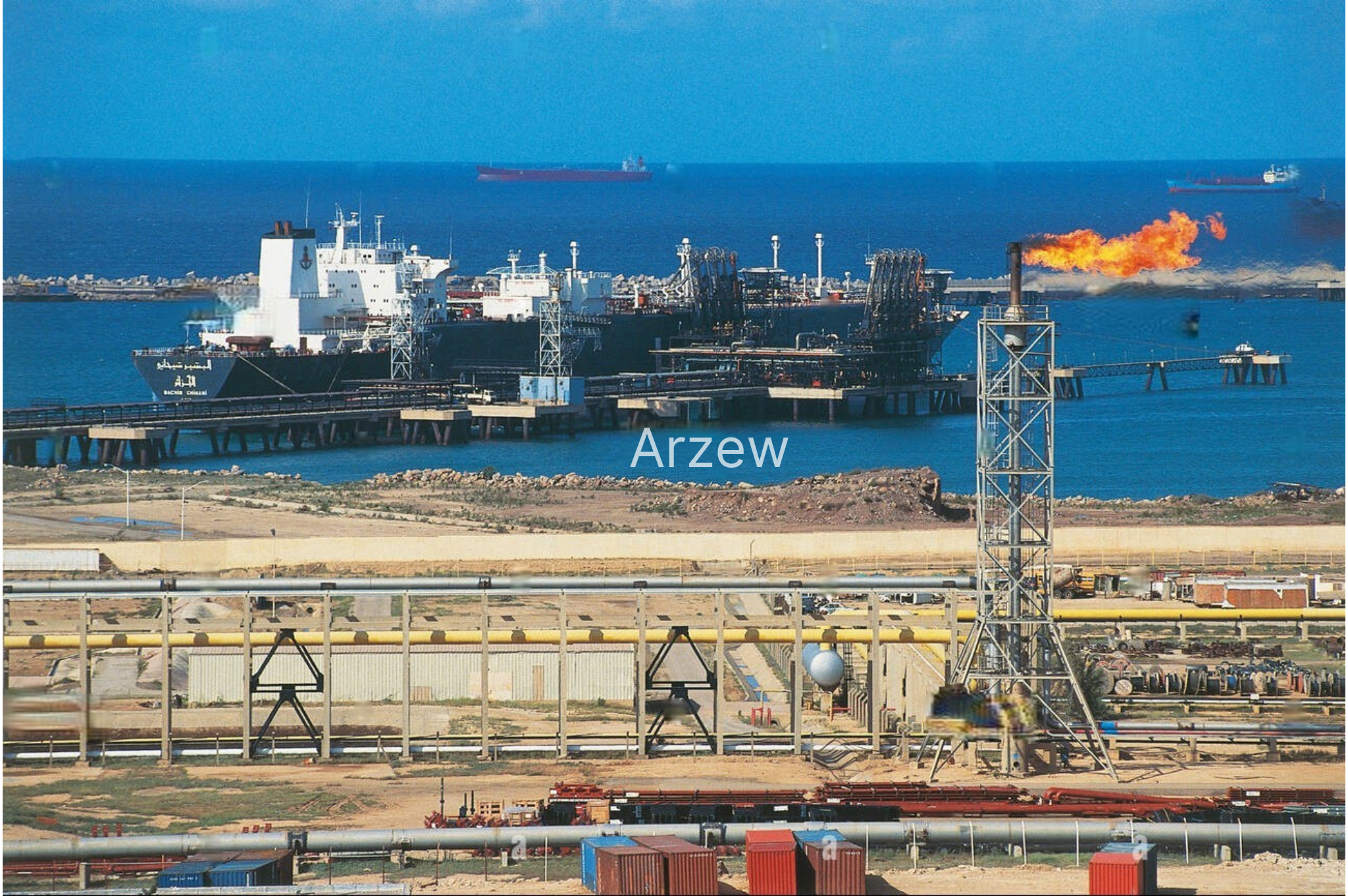
Arzew and its neighbour Bethioua (Arzew El Djedid) share the Gulf of Arzew, east of Oran. Their terminals load crude oil, LPG, LNG, condensate and refined products. Our local office in Arzew handles calls at both.
At a glance
- UN/LOCODE
- DZAZW
- Position
- 35°50′–35°52′N, 0°08′–0°17′W (Arzew)
- Charts
- BA 0838, BA 0822
- Local time
- UTC+1 all year
- Port control
- VHF 14
- Terminal
- VHF 16, working 14 or 12
- Pilots
- VHF 16, working 13 or 12
- ISPS
- Port ID 13567 (Arzew), 25762 (Bethioua)
- Sea water density
- 1.025
- Cargoes
- Crude oil, LPG, LNG, condensate, naphtha, gasoil, lube oil and methanol
Berths
| Berth | Cargo | Max LOA | Max draft | Connection | Loading |
|---|---|---|---|---|---|
| B1 | Crude (SBCO, CPP) | 440 m | 19.0 m | 2 × 16″ hoses, starboard | 4,000–4,500 m³/h; about 28–32 h |
| B2 and B3 | Crude (SBCO, CPP) | 440 m | 19.0 m | 2 × 16″ hoses, starboard | about 39,530 bbl/h; about 25 h per million barrels |
| M1 | Crude (SBCO) | 480 m | 12.5 m | 1 × 16″ arm; parallel body at least 90 m | – |
| SPM | Crude | No restriction | No restriction | Single point mooring | – |
| S2 | Products (naphtha, gasoil) | 220 m | 9.9 m | 1 × 12″ hose, port side | about 780 m³/h; at least 48 h |
| S3 | Gasoil, lube oil, methanol | 180 m | 9.9 m | Operated by Sonatrach ISP | – |
| P3 | Crude | 320 m | 17.0 m | 2 × 16″ hoses, port side | Under maintenance and not in use at last check |
- Water depth: 21 m alongside B1 to B3, with approach channels of 23.5 m (east) and 21 m (west). 10.5 m alongside S2 and S3, with a 19 m approach.
- Mooring: 8 lines forward and 8 aft at B1 to B3, 6 and 6 at S2. Ships use their own ropes; wires are accepted at S2 and S3.
- A Suezmax has no particular parallel body restriction; crude usually loads at B2 and B3.
- Ballast: arrive with clean sea water ballast. There is no special exchange requirement.
Arrival
- Send ETA notices to the suppliers, the terminal and us 96, 72, 48, 24 and 12 hours before arrival (product cargoes: 72, 48, 24 and 12 hours, as per the charterer’s instructions).
- Send the ISPS form 48 hours ahead to the port facility security officer, with the Maritime Declaration of Health and the crew list, copying us. We send the form with our port information.
- Hoist the Algerian flag on arrival The coastguard checks it as soon as the ship reaches the roads, and can fine a ship that hasn’t.
- Call port control at 10 NM and drift Anchoring is not permitted at Arzew or Bethioua. Port control tells the ship where to drift; it then waits at about 5 NM until called, and the pilot boards at about 2 NM. Stay within VHF range of port control.
- Berth in daytime Since 20 February 2013, ships may not berth or sail between 21:00 and 05:00 unless the pilots decide otherwise for that ship. Sailing ships go before arriving ones.
- Clear in The master signs a declaration that the ship is seaworthy and holds every certificate required. Logbooks, certificates and registers are inspected.
- Declare sailing at least 2 hours before the ship sails.
Good to know
- Local fishing boats work the area 35.55–36.00 N, 000.00–000.05 W. Avoid drifting there if you can, and keep 10 miles off Kef Salamandre.
- Berthing at B2 and P3 can be held up by open-sea weather: strong wind or swell.
- Free pratique: at the sea line or SPM it is granted by a visiting sanitary officer or by the pilot, if the health declaration is in order; inside the harbour, by the health officer who boards.
- Sonatrach, as shipper, gives the ship a copy of the cargo’s safety data sheet.
Pilots and tugs
- Pilotage is compulsory. The pilot boards in the waiting zone and agrees the passage plan with the master.
- Rig the pilot ladder on the lee side, 1 m above the water. Large ships in ballast rig a combination with the accommodation ladder, about 5 m above the water.
- Tugs are compulsory for ships over 1,500 GT. Tankers of 50,000 dwt and more use at least three tugs to berth.
- The ship supplies the towlines, in good condition and suited to the manoeuvre.
- Sign the pilotage bills in and out with the exact towage times, and report the particulars on the class-approved certificate (the reduced gross tonnage for a ship with segregated ballast tanks).
Documents
Before arrival
Send copies to us as early as possible; the Algerian authorities ask for them before the ship arrives.
- General declaration
- International Ship Security Certificate
- Cargo declaration
- Crew effects declaration
- Crew list
- Ship’s stores declaration
- Passenger list
- Dangerous goods manifest
- International Tonnage Certificate (1969)
- Certificate of registry
- Oil pollution liability insurance certificate
- Ship’s particulars
On arrival, by authority
Have them ready, dated, signed and stamped, when the officials board.
Harbour master 11 items
- Ballast declaration (tankers, free form stating quantity and type)
- Certificate of registry
- Safety construction certificate
- Safety equipment certificate
- Passenger ship safety certificate
- Load line certificate
- Safety radio certificate
- Fire extinguisher certificate
- Cargo gear certificate
- IOPP certificate
- The harbour master’s declaration, completed
Health 4 items
- Crew list
- Crew vaccination list
- Maritime Declaration of Health
- Narcotics list
Customs (each list separately) 15 items
- Ship’s currency declaration
- Crew currency declaration
- Crew list
- Crew effects declaration
- Bonded stores list
- Narcotics list
- Arms and ammunition list
- Passenger list
- Animals and plants list
- Stowaways list
- Dangerous goods declaration
- Copy of the certificate of registry
- Ship’s equipment list (TV, video…)
- Vaccination list
- Maritime Declaration of Health
Immigration (each list separately) 10 items
- 5 crew lists
- Bonded stores list
- Narcotics list
- Arms and ammunition list
- Passenger list
- Animals and plants list
- Stowaways list
- Dangerous goods declaration
- Crew vaccination list
- Maritime Declaration of Health
Agent (each list separately) 16 items
- Clearance from the last port
- Ship’s currency declaration
- Crew currency declaration
- 2 crew lists
- Crew effects declaration
- Bonded stores list
- Narcotics list
- Arms and ammunition list
- Passenger list
- Animals and plants list
- Stowaways list
- Dangerous goods declaration
- Copy of the certificate of registry
- Copy of the International Tonnage Certificate
- Copy of the ship’s particulars
- Cargo manifest, or “no cargo on board”
Weather at Arzew and Bethioua
Loading the forecast…
Days are flagged when the wind reaches 25 knots, gusts 34 knots or the sea 2.5 m. They are a prompt to plan, not a port closure: the harbour master and the pilots decide. Forecast: Open-Meteo (ECMWF and Météo-France models), CC BY 4.0.
Questions
Can a Suezmax load at Arzew?
Yes. The crude jetties B1 to B3 take ships up to 440 m long and 19.0 m draft, with no particular parallel body restriction for a Suezmax. Crude usually loads at B2 and B3, at about 39,530 barrels an hour.
Can ships anchor off Arzew or Bethioua?
No. Anchoring is not permitted at either port. Ships waiting for a berth drift where port control tells them, within VHF range.
Can ships berth at night at Arzew?
Not normally. Since February 2013 no berthing or sailing is allowed between 21:00 and 05:00, unless the pilots decide otherwise case by case.
How long does loading take at Arzew?
About 25 hours per million barrels at B2 and B3, 28 to 32 hours at B1, and at least 48 hours at the product jetty S2. The terminal’s plan on the day decides.
What is the maximum draft at the product berths?
9.9 m at S2 and S3, with 10.5 m of water alongside. S2 takes ships up to 220 m and S3 up to 180 m.
When should ETA notices be sent for Arzew?
96, 72, 48, 24 and 12 hours before arrival, to the suppliers, the terminal and the agent.
What is the sea water density at Arzew?
1.025.
Our Arzew office
05 Rue Abdelhamid Benbadis, 31200 Arzew
+213 41 77 10 09
ops@sermarineshipping.com
Berth figures and procedures from our port information to vessels, as last sent in March 2026 (crude berths) and September 2026 (product berths). They are indicative: port control and the terminal have the last word, so ask us for the latest before your call.