

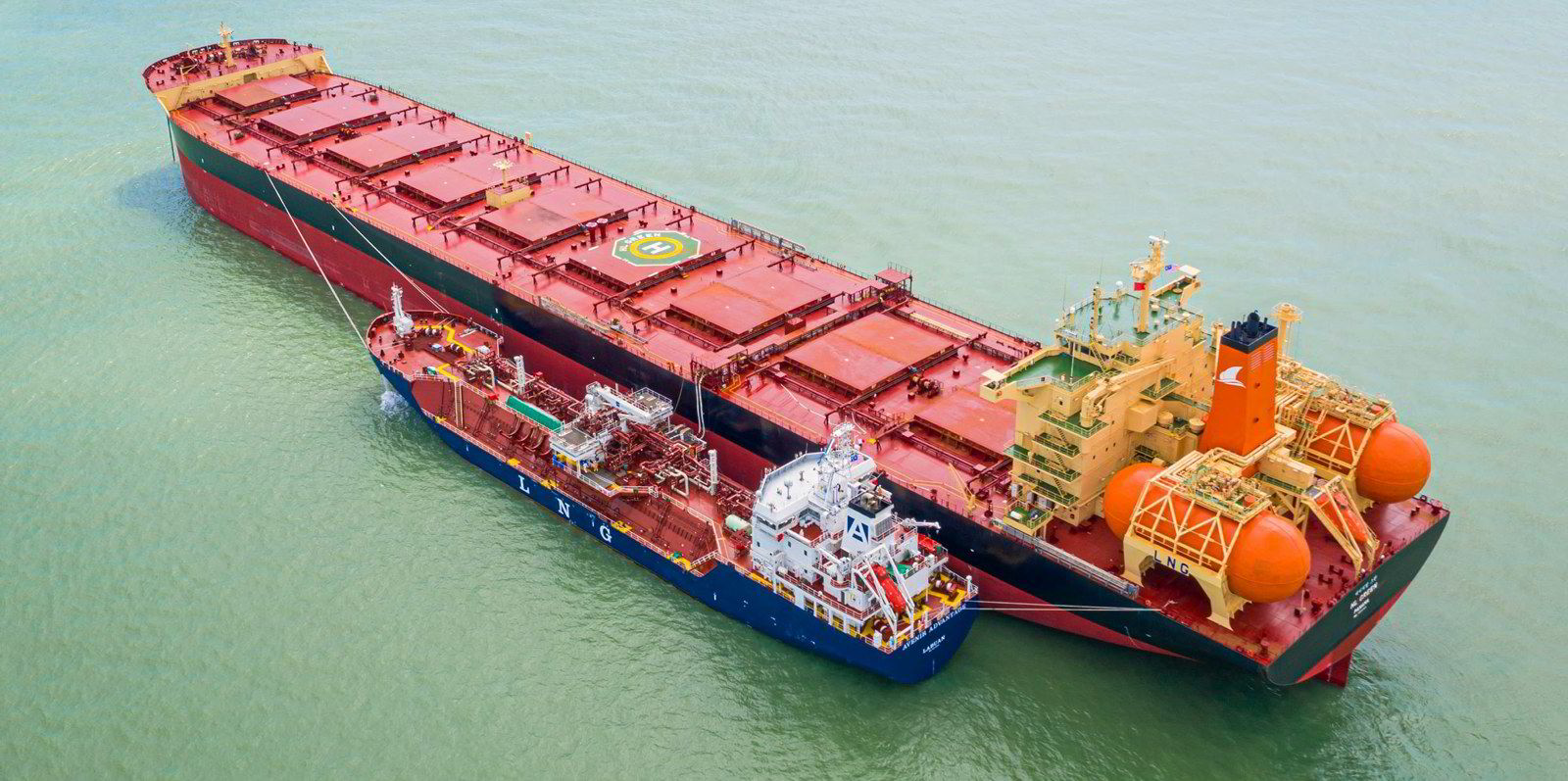
The words used in a port call in Algeria, from the nomination to the final account, in plain English.
A
- Agent (port agent, ship agent)
- The company that represents the shipowner or charterer at a port: it prepares the call, deals with the port, terminal and authorities, and accounts for the costs.
B
- Ballast declaration
- A statement by the master of the quantity and type of ballast water on board. Algerian ports ask tankers for one on arrival.
- Bonded stores
- Ship’s stores kept under customs seal while in port, such as alcohol and tobacco, listed on the ship’s stores declaration.
C
- Call number
- The reference a call gets when the ship arrives. Every document for the call carries it.
- Clearance (outwards)
- The authorities’ permission for the ship to sail, after customs, immigration and the harbour master are satisfied.
- Compte d’escale
- The local office’s account of a call in Algeria, in dinars, with the port’s invoices. The FDA is built from it.
D
- Declaration of security (DOS)
- An ISPS agreement between the ship and the port facility on the security measures each will take.
- Draft (draught)
- How deep the ship sits in the water. Berths set a maximum draft.
- Drifting
- Waiting for a berth without anchoring. At Arzew and Bethioua, ships drift because anchoring is not permitted.
E
- ETA notices
- Messages giving the ship’s expected time of arrival, sent at set intervals before arrival (96, 72, 48, 24 and 12 hours at Arzew and Skikda).
F
- FAL forms
- The IMO’s standard forms for ship formalities: general declaration, cargo, stores, crew effects, crew list, passenger list and dangerous goods.
- FDA (final disbursement account)
- The final account of a port call’s costs, with the invoices, issued after the ship sails.
- Free pratique
- Permission from the health authorities for the ship to make contact with the shore.
H
- H2S
- Hydrogen sulphide, a toxic gas in some crude oils and condensates. At Skikda, the surveyors ask for the H2S levels in the tanks.
- Husbandry
- Services for the ship and crew rather than the cargo: crew changes, spares, stores, fresh water, provisions.
I
- ISPS Code
- The International Ship and Port Facility Security Code, which sets security levels and procedures for ships and ports.
L
- Laycan
- The laydays and cancelling dates: the window in which the ship must arrive to load under the charter.
- LOA (length overall)
- The ship’s total length. Berths set a maximum LOA, and Skikda sets tug numbers by it.
M
- MARSEC level
- The maritime security level (1 normal, 2 heightened, 3 exceptional) under the ISPS Code.
- Maritime Declaration of Health
- The master’s declaration on the health of everyone on board, required before free pratique.
N
- Nil list
- A declaration that the ship has nothing to declare in a category, such as no passengers or no arms.
- Nomination
- The principal’s appointment of an agent for a call. In our case, always by email.
- NOR (notice of readiness)
- The master’s notice that the ship has arrived and is ready to load or discharge. Laytime counting depends on it.
O
- Overtime
- Work outside normal port hours, which some ports charge extra for. At Arzew it covers 21:00 to 05:00, Fridays and public holidays; Skikda has charged none on berthing since 2019.
P
- Parallel body
- The length of the hull with flat, parallel sides, which must be long enough to rest against the berth’s fenders.
- PDA (proforma disbursement account)
- The estimate of a port call’s costs before the ship arrives.
- PFSO (port facility security officer)
- The officer responsible for security at the port facility under the ISPS Code; ships send their pre-arrival security form to the PFSO.
- Pre-funding
- The principal’s payment of the PDA in advance, so the port costs are covered.
- Principal
- The party that appoints the agent: shipowner, operator, manager, charterer or trader.
- Protective agent
- An agent appointed by the owner to look after its interests when the charterer has appointed the main agent.
R
- Roads (roadstead)
- The sea area off a port where ships wait for a berth.
S
- SBT (segregated ballast tanks)
- Ballast tanks separate from the cargo tanks. Ships with SBT can have a reduced gross tonnage for port dues.
- Sea line
- An offshore berth where the ship connects to a pipeline at sea rather than alongside a jetty.
- SOF (statement of facts)
- The record of the times of everything that happens during the call, from arrival to sailing. Laytime is calculated from it.
- SPM (single point mooring)
- An offshore buoy the ship moors to and loads or discharges through hoses.
- Standby tug
- A tug kept ready near the ship while it is at the berth or buoy, for safety.
U
- UN/LOCODE
- The United Nations’ five-character code for a port, such as DZAZW for Arzew and DZSKI for Skikda.
V
- VEF (vessel experience factor)
- The average difference between the ship’s measured and the shore’s figures over recent voyages, used in cargo calculations.